The AI story most teams are still telling in 2026 is lazy: pick a frontier model, stream prompts, pray the bill doesn’t spike, and call it “product.” That’s not a strategy. It’s outsourced differentiation.
The quieter shift is the one that matters: the model is moving to the user. Not because it’s trendy, but because it fixes three things founders and operators actually lose sleep over—unit economics, latency, and data risk—without asking your customers to trust your cloud. Apple shipped Apple Intelligence with a split architecture (on-device + Private Cloud Compute). Microsoft has pushed “Copilot+ PCs” and a Windows story that assumes local NPUs exist. Google has a serious on-device posture via Tensor/Pixel and Android ML stacks. NVIDIA made local inference normal on developer machines with GPUs and toolchains that treat inference as a first-class workload. Qualcomm wants NPUs everywhere.
Here’s the contrarian take: most “AI apps” in the next wave won’t win by having the best model. They’ll win by being the best appliance: fast, predictable, private, and cheap per user because inference happens on hardware the customer already bought.
Key Takeaway
If your product can’t do anything useful without a round-trip to a hosted LLM, you’re building on quicksand: price changes, rate limits, policy shifts, and outages are outside your control. On-device isn’t a feature; it’s control over your own margins and reliability.
The “frontier model tax” is now a line item founders can’t ignore
Every team learns the same lesson the hard way: hosted LLM inference costs don’t behave like normal SaaS costs. They behave like variable COGS tied to user behavior you don’t fully control. Add multimodal inputs, long contexts, and tool calls and you’re not scaling “software.” You’re scaling a meter.
It gets worse. The more your app feels magical, the more users ask it to do. That’s great—until your margin collapses. You can add caching, stricter truncation, and batching. You can push users into smaller models. You can rewrite prompts to be shorter. Those moves help, but they don’t change the structural problem: you pay someone else each time your product does its core job.
Most teams treat inference like bandwidth: a boring commodity. It isn’t. Inference is your cost of goods sold and your latency budget, and both are product decisions.
On-device inference isn’t “free,” but it’s a different equation. You trade vendor variable cost for engineering cost and hardware variability. For many products—especially ones with frequent interactions—that trade is attractive.
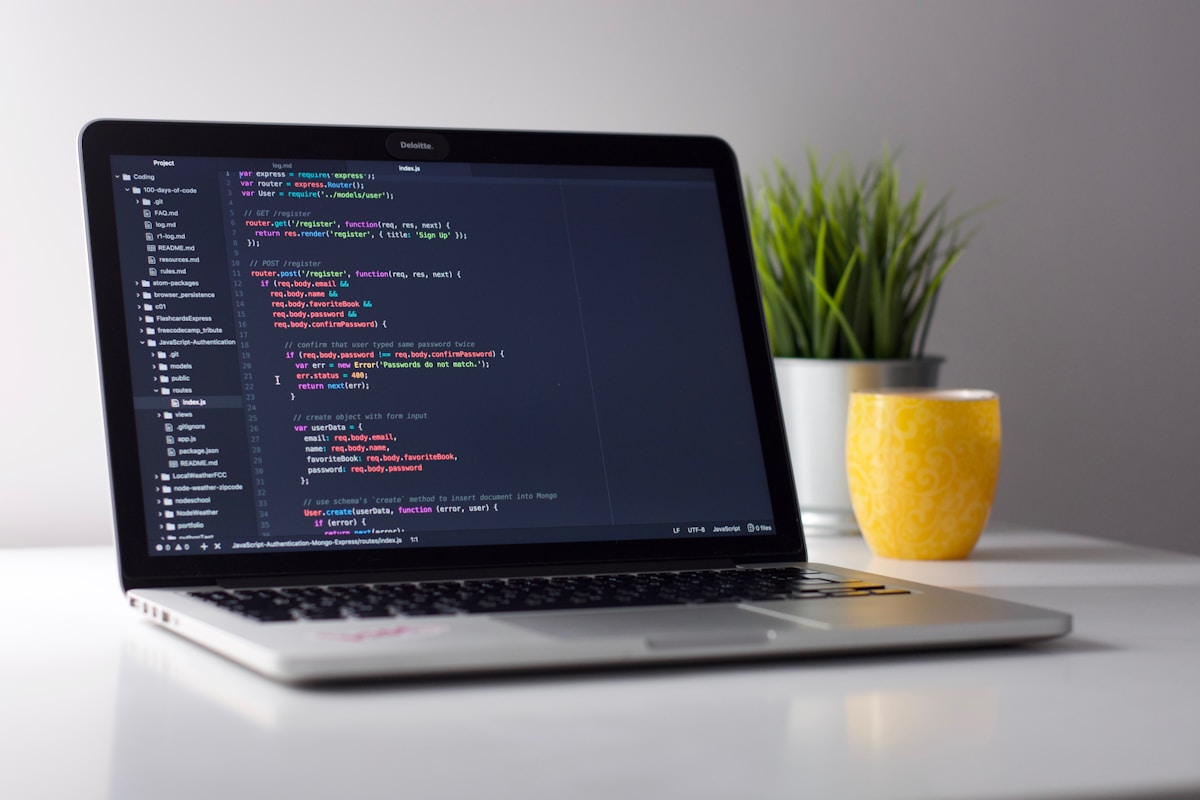
What “on-device” actually means in 2026 (and why the split architecture wins)
“On-device AI” is a bucket term. If you don’t define it, you’ll ship a demo that collapses in the real world.
Three deployment patterns that matter
- Pure local: everything runs on the device. Best for privacy, offline, and predictable per-user cost. Hardest for quality if you need large context or heavy reasoning.
- Local-first + cloud fallback: default to local for common tasks, escalate to cloud for hard cases. This is where most serious products should land.
- Cloud-first + “edge spice”: lightweight local features (wake word, embedding search, OCR) feeding a cloud LLM. This is common—and often mislabeled as on-device AI.
Apple’s Apple Intelligence messaging made something explicit: customers care about privacy and responsiveness, but they still want quality. Apple’s answer is split execution: on-device for many tasks, and server-side for more complex ones through Private Cloud Compute. The product implication is bigger than Apple: users will come to expect some meaningful capability without shipping their data to a third party by default.
Founders should internalize a simple rule: if the core loop of your app can be local, make it local. Use the cloud for edge cases, not for everything.
The real stack: runtimes, formats, and why “model choice” is the wrong obsession
Teams waste time arguing about model families while ignoring the boring question that decides whether they ship: what runtime will you bet on?
In practice, shipping on-device means picking an execution path that matches your target hardware and ecosystem. You can get surprisingly far with a small set of production-grade options.
Table 1: Practical on-device / local inference options in 2026 (what they’re good for, and what they’re not)
| Option | Best fit | Trade-offs | Where it shows up |
|---|---|---|---|
| ONNX Runtime | Cross-platform inference for classic ML and some transformer workloads; strong CPU paths | You still need a model converted appropriately; GPU/NPU acceleration varies by platform | Windows, Linux, servers, some mobile pipelines |
| TensorFlow Lite | Android and embedded-friendly inference; mature mobile tooling | Model conversion constraints; not every modern architecture is pleasant to deploy | Android apps, edge devices |
| Apple Core ML | iOS/macOS deployment with tight OS integration and hardware acceleration | Apple ecosystem only; conversion and operator support can dictate architecture | iPhone, iPad, Mac apps |
| llama.cpp (GGUF) | Local LLM inference on CPU/GPU with broad community support and fast iteration | You own packaging, update strategy, and safety controls; performance depends heavily on hardware | Developer tools, desktop apps, prototyping that graduates to production |
| NVIDIA TensorRT | High-performance inference on NVIDIA GPUs, including on-prem and edge boxes | Ties you to NVIDIA; best results require careful optimization and model compatibility | Workstations, edge servers, industrial deployments |
Notice what’s missing: “Which frontier model?” That choice matters for cloud use. For on-device, runtime constraints drive the architecture more than brand names do. Quantization format, operator coverage, memory, and hardware acceleration determine your product envelope.

Designing a local-first product: treat the model like a dependency, not a brain
Most AI products fail on-device because they’re designed like chatbots. Chat is the worst UI for constrained inference. You want small, targeted models doing specific jobs with tight prompts, bounded output, and deterministic post-processing.
Patterns that ship well locally
- Extraction over free-form generation: turn “write a reply” into “fill this JSON schema.”
- Small context by default: summarize locally; only fetch heavy context when the user asks for a deep dive.
- Tool-first flows: local model decides which deterministic tool to run (search, calendar, file parser) rather than hallucinating.
- Precompute embeddings on-device: personal search across notes/files is a killer feature that doesn’t require cloud by default.
- Stateful UX, stateless model calls: store user state in your app; don’t force the model to “remember” everything via huge prompts.
Local-first isn’t “no cloud.” It’s cloud by exception. That requires instrumentation: you need to know when the local model is failing and why. You can do that without uploading raw user data by logging structured failure signals (timeouts, schema validation failures, user corrections) and only collecting content through explicit opt-in.
A minimal local-first routing loop
Most teams over-engineer this. Start with a router that answers one question: “Can the device handle this request within a tight budget?” If not, escalate.
# Pseudocode: local-first routing
if offline():
  run_local()
else:
  result = run_local(timeout_ms=800)
  if result.valid and result.confidence >= threshold:
    return result
  else:
    return run_cloud(with_minimized_context=True)
You can get sophisticated later (per-task thresholds, user preferences, cost ceilings). The point is to make the split explicit, testable, and observable.
The ugly parts: distribution, updates, safety, and the new ops burden
On-device makes your product cheaper to run, then hands you a different set of problems. Teams that pretend those problems don’t exist ship insecure binaries, stale models, and unpredictable performance.
Model distribution is now part of your release engineering
Shipping a model isn’t like shipping JavaScript. You need a packaging strategy (in-app vs downloaded), version pinning, rollback, and integrity checks. Desktop apps can update aggressively; mobile app stores add friction. If your model is a separate artifact, your update pipeline must treat it like a signed dependency.
Safety isn’t optional just because it’s local
Some teams treat local inference like a loophole: “It’s on the user’s device, so it’s not our problem.” That’s naive. If your app can generate harmful content, exfiltrate data, or take actions, you own the outcomes. Local models still need guardrails: constrained outputs, action confirmations, and strong sandboxing around tools.
Hardware variance will embarrass you
On-device performance isn’t one number. It’s a matrix of CPU, GPU, NPU, RAM, OS version, thermal conditions, and whether the user is also on a video call. If your product promise requires consistent latency, you need dynamic quality settings and a graceful “degrade mode.”
Table 2: Local-first shipping checklist (what to decide before you announce “on-device”)
| Decision | Why it matters | Concrete options |
|---|---|---|
| Artifact strategy | Controls download size, update speed, and rollback capability | Bundle in app; first-run download; staged background updates |
| Runtime target | Determines performance and what architectures you can ship | Core ML (Apple); TFLite (Android); ONNX Runtime (cross-platform); llama.cpp (desktop) |
| Fallback policy | Prevents “local pride” from degrading user experience | Never fallback; task-based fallback; confidence/timeout-based fallback |
| Data boundary | Defines what leaves the device and how you justify it | On-device only; opt-in upload; minimized context upload; enterprise policy controls |
| Tool permissions | Stops model output from turning into arbitrary actions | Read-only by default; explicit confirmations; per-tool sandboxing; audit logs |

Where the moat moves: distribution, defaults, and owning the user’s personal context
The most valuable AI products won’t be the ones that answer trivia. They’ll be the ones that sit on top of a user’s personal corpus—files, messages, notes, tickets, repos—and make it searchable and actionable. Doing that in the cloud invites a trust fight you don’t need. Doing it on-device turns trust into an implementation detail.
This is why platform companies care. Apple, Microsoft, and Google aren’t pushing on-device inference because they love developer ergonomics. They’re pushing it because the default assistant wants to be the layer that touches everything: notifications, documents, photos, calendars, and system actions. If the platform owns the on-device stack, third-party apps start from behind.
Founders can still win, but not by building “ChatGPT, but for X.” Win by building the best workflow for a specific operator with a specific corpus and a specific set of actions. Local-first makes that tractable because you can index and process sensitive material without turning every customer into a procurement cycle.
A blunt prediction worth planning around
By the time teams finish migrating from one hosted model to the next, the market will have moved: users will expect offline-capable features and privacy-by-default, and regulators will keep asking uncomfortable questions about data movement. The teams that already treat the device as the default compute location will look “magically fast” and “surprisingly trustworthy,” even if their models are smaller.
A concrete next move: run a one-week “local-first spike” before you build anything else
If you’re building an AI feature in 2026 and you haven’t tested it locally, you’re flying blind. Don’t debate it in a doc. Do a spike.
- Pick one narrow user job (not “chat with my data”). Example: “extract action items from this meeting transcript into a task list schema.”
- Implement it locally using a runtime you can plausibly ship (Core ML / TFLite / ONNX Runtime / llama.cpp).
- Define a hard budget: max latency you’ll tolerate and a memory ceiling. Treat overruns as a design failure, not an optimization backlog.
- Add a cloud fallback that sends the smallest possible context, then compare UX. If cloud is only marginally better, keep local as default.
- Decide your data boundary in writing: what ever leaves the device, and under what user control.
If you can’t make a single narrow workflow feel good locally, you’re not ready to promise “on-device.” If you can, you’ve found something rare: a feature that scales with users without scaling your bill. Sit with the uncomfortable question your competitors won’t ask: which parts of your product should run on hardware you don’t pay for?