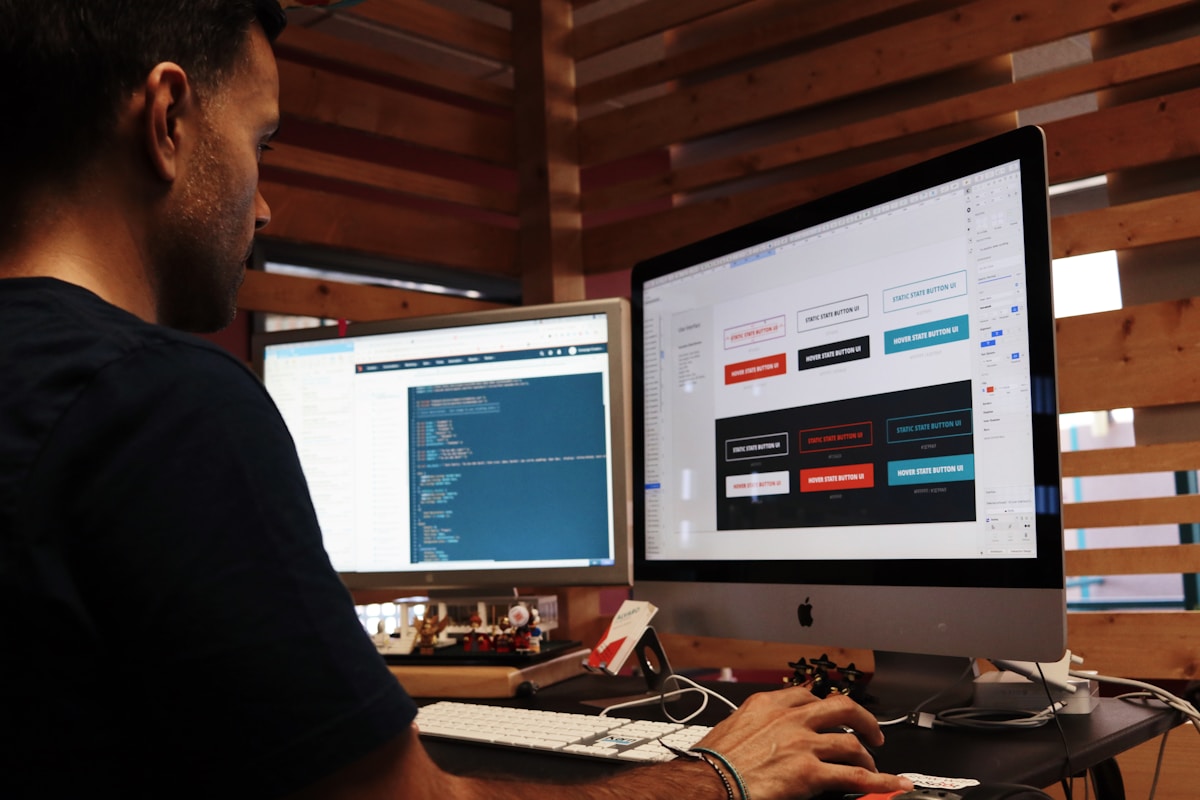
Stop Shipping Chatbots: The Product Move for 2026 Is Agentic UI That Proves What It Did
Chat interfaces are a tax on real work. In 2026, winning products ship agentic flows with auditability, permissioning, and reversibility built in.

Editor-at-Large
Michael is ICMD's editor-at-large, covering the intersection of technology, business, and culture. A former technology journalist with 18 years of experience, he has covered the tech industry for publications including Wired, The Verge, and TechCrunch. He brings a journalist's eye for clarity and narrative to complex technology and business topics, making them accessible to founders and operators at every level.
Chat interfaces are a tax on real work. In 2026, winning products ship agentic flows with auditability, permissioning, and reversibility built in.
The hard part of agents isn’t the model. It’s the runtime: tools, permissions, traces, and failure modes. Here’s what actually works in production in 2026.
Chat UIs are a trap for product teams. In 2026, the winners will ship agentic workflows as auditable queues with permissions, receipts, and rollback.
MCP turned “tool use” from bespoke glue code into an interface layer. If you're building agents in 2026, this is the real platform shift—whether you like it or not.
RAG chatbots are a dead-end for serious operators. The winning 2026 pattern is agents constrained by deterministic tools, audited with real evals, and instrumented like production systems.
The winners aren’t the cleverest model wrappers. They’re the teams that can prove what happened, why it happened, and who approved it—at runtime.
The 2024–2026 AI product trap is a slick chat box that can’t be trusted. The winners ship agentic workflows users can audit, constrain, and undo.
Retrieval-augmented generation isn’t “best practice” anymore—it’s technical debt. 2026 winners are designing for long context, tool calls, and auditable memory.
The winners aren’t the apps with the flashiest model. They’re the ones with enforceable AI behavior: policy, provenance, and fallback—shipped as a contract.
Users don’t want another chat box. They want software that completes work end‑to‑end—with guardrails, audit trails, and real ownership of outcomes.
Most teams are shipping “agents” with hard-coded API keys and vague permissions. Treat agents like identities—before audit, breach, or bill shock forces you to.
Most “agent” demos die the moment a real system demands auth, idempotency, and audit trails. The winners in 2026 will ship transactional AI with boring reliability.
Founders keep shipping wrappers tied to one model and one vendor. The winning 2026 products will be diff-first: auditable, portable, and priced around outcomes—not tokens.
The winners in 2026 won’t be the teams with the best model. They’ll be the teams who treat LLMs like unreliable components—and engineer the rest like it matters.
Model Context Protocol is quietly turning AI features into infrastructure. If you’re still shipping one-off “AI assistants,” you’re building the new Clippy.
AI copilots didn’t just speed up coding—they changed the failure modes. In 2026, leadership means treating software like a safety-critical system, even if you’re “just” shipping SaaS.
Users don’t want more AI buttons. They want a different product state. Treat AI as a mode with explicit boundaries—or you’ll ship confusion, cost spikes, and trust debt.
AI didn’t kill product thinking. It moved it upstream. The new leadership bottleneck is the spec, not the code.
Agents don’t fail like chatbots—they fail like engineers with credentials. This is the 2026 stack that keeps tool use auditable, budgets bounded, and incidents explainable.
AI doesn’t just speed up work—it multiplies decisions and failure modes. Here’s how leaders are reshaping accountability, eval discipline, and metrics so teams can move fast without chaos.
Agents don’t fail because prompts are weak. They fail because pricing, permissions, and proof weren’t designed for production.
If agents can ship code, reply to customers, or move money, “trust” is a policy decision. Run agents like production systems—or accept production-grade failures.
Most agent startups don’t lose to hallucinations—they lose to permissions, audit trails, and unit economics. Build bounded autonomy that survives real systems and real buyers.
Agents fail in three boring ways: they overspend, they break policy, or they quietly get worse. The fix is an SRE-style stack: budgets, policy-as-code, eval gates, and replayable traces.
Buyers stopped asking which model you use. They ask what breaks, how you roll back, and what gets logged. This is the 2026 playbook for shipping agents that survive production.
If your “agent” can’t be replayed, scoped, and priced, it’s not a product. Here’s the 2026 enterprise standard: routing, contracts, SLOs, and audit trails.
Procurement stopped buying agent demos. If your system can’t show identity, traces, evals, and cost per outcome, you’re not selling software—you’re selling hope.
AI can flood your repo with “done-looking” code. The winning CTOs treat verification, provenance, and rollback as the real product—and measure that, not PR volume.
The agent products that win aren’t the smartest—they’re the easiest to control. Design autonomy like payments: scoped permissions, proofs, observability, and spend limits.
Most “agent” products still die in production for the same reason: nobody can explain, limit, or debug the actions. Here’s what serious teams build instead.
Agents can crank out PRs nonstop. Leadership’s job is to stop “more output” from turning into more incidents, more cost, and less trust.
Static roadmaps can’t keep up with AI-generated change. The new job is running a controlled runtime loop: flags, metrics, evals, and policies that stop dumb optimizations fast.
Agents aren’t a chat UX anymore. If you can’t measure cost per task, control permissions, and ship audit trails, you’re shipping a demo—not a product.
One smart model improvising and coding in the same breath is expensive. Claude Advisor puts planning in Opus and execution in Sonnet/Haiku—then makes the handoff visible.
Stop reading “PC rebound” headlines. 2026 is a platform reset: Windows 10’s deadline collides with on-device AI and real ARM laptops that finally fit enterprise work.
VC can buy speed. Bootstrapping buys discipline—and forces choices on pricing, focus, and distribution that many founders avoid until it’s too late.
Add ICMD as a preferred source and our latest articles, guides, and analysis show up higher when you search on Google.
ICMD. Add as a preferred source on Google