
Stop Selling “AI Features.” Start Shipping Agents With Receipts.
In 2026, the startup wedge isn’t a chatbot. It’s measurable work completed end‑to‑end—with logs, controls, and a bill you can defend.
 Priya Sharma
Startup Attorney
Priya brings legal expertise to ICMD's startup coverage, writing about the legal foundations every founder needs. As a practicing startup attorney who has advised over 200 venture-backed companies, she translates complex legal concepts into actionable guidance. Her articles on incorporation, equity, fundraising documents, and IP protection have helped thousands of founders avoid costly legal mistakes.
In 2026, the startup wedge isn’t a chatbot. It’s measurable work completed end‑to‑end—with logs, controls, and a bill you can defend.
Priya Sharma

Agents don’t want your UI. They want safe, auditable write access. If your product can’t be driven by APIs with policy and provenance, an agent will route around you.
Priya Sharma

By 2026, the hardest product problem in AI isn’t model choice. It’s turning unreliable agent behavior into something you can own, debug, and ship.
Priya Sharma

The winners aren’t “AI features.” They’re permissioned agents wired into real systems, with auditable actions, predictable failure modes, and boring reliability.
Priya Sharma

The winners in 2026 won’t be the teams with the flashiest demos—they’ll be the teams that can run agents safely, observably, and cheaply in production.
Priya Sharma
The 2026 winners won’t be the loudest copilots. They’ll be products that refuse unsafe, expensive, or low-confidence work—cleanly, measurably, and without breaking user trust.
Priya Sharma
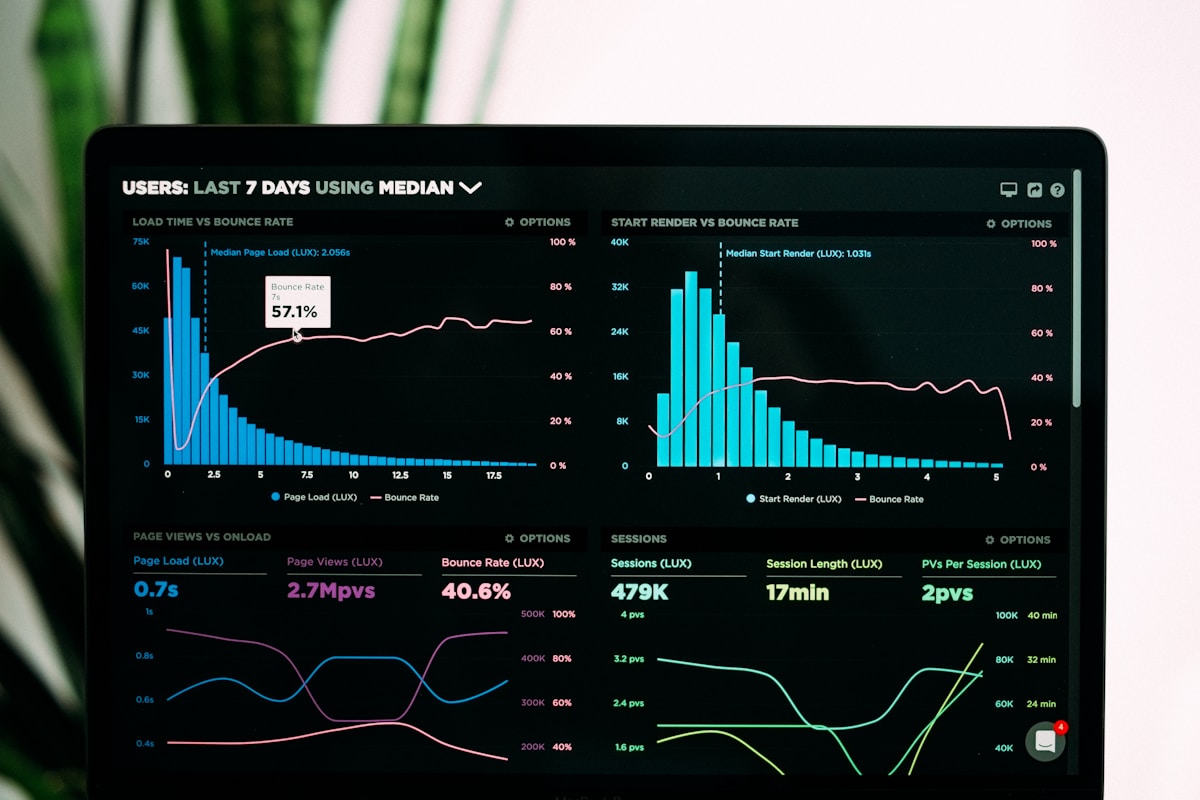
Agentic UX is turning products into operators. If your product can act, you need governance primitives: logs, approvals, scopes, and repeatable runs—before you need another model.
Priya Sharma
AI didn’t eliminate engineering management. It exposed who was managing output instead of decisions, risk, and operating cadence.
Priya Sharma

In 2026, your differentiator isn’t a model. It’s the supply chain: data rights, evals, routing, cost controls, and contracts that survive the next API shock.
Priya Sharma

If your “AI strategy” is a vector database and a prompt, you’re already late. The winners in 2026 will treat retrieval as plumbing and fight over tool contracts, context runtime, and evals.
Priya Sharma
The durable moat in AI startups isn’t a prompt or a model. It’s the operational layer: evals, permissions, audit trails, cost controls, and failure handling for agents in production.
Priya Sharma
AI roadmaps fail because teams bolt chat onto workflows. The winners design an AI surface area: permissions, provenance, evals, and fallbacks as product primitives.
Priya Sharma
MCP is turning “agent tools” into a software supply chain. Treat it like one—or expect outages, data leaks, and runaway spend.
Priya Sharma
The winning AI stacks in 2026 won’t bet on one model. They’ll route tasks across many—cheap, fast, private, and compliant—without users noticing.
Priya Sharma
In 2026, AI tools don’t fail because they’re dumb. They fail because leaders won’t change how decisions get made, reviewed, and audited.
Priya Sharma

Everyone shipped RAG. Now the failures are operational: drift, permissions, evals, and runaway tool calls. Here’s what actually holds up in production.
Priya Sharma

Most AI products still confuse chat with capability. In 2026, the winners are decision systems: scoped authority, audit trails, and fallbacks—not vibes.
Priya Sharma
In 2026, the product isn’t the model. It’s the controls: identity, policy, evaluation, and audit across every AI call your company makes.
Priya Sharma
In 2026, “agentic” UX is shipping everywhere—and quietly creating new failure modes. Here’s how to design AI actions users can trust, audit, and undo.
Priya Sharma
Chat UIs are a trap. The winning product pattern for 2026 is an agent that can take constrained actions, ask for approval, and refuse risky work.
Priya Sharma
The winners aren’t shipping clever prompts. They’re shipping systems that can prove what happened, why, and who approved it—under EU AI Act and enterprise procurement.
Priya Sharma
Your next “integration” hire should be an agent-interface engineer. In 2026, distribution goes through model runtimes—and MCP is the new API surface.
Priya Sharma
Most teams treat AI as a tool rollout. The winners run it like a production system: governance, evals, cost controls, incident response, and clear decision rights.
Priya Sharma
In 2026, the competitive edge isn’t a better model. It’s a policy layer that makes AI behavior predictable, auditable, and shippable across every surface.
Priya Sharma
“AI features” are collapsing into a commodity UI. The product edge in 2026 is an agent control plane: permissions, tools, audit, and safe delegation across workflows.
Priya Sharma
AI agents didn’t just add a new UI. They broke your product org’s ownership model. Here’s the contrarian fix: design decision rights as the product.
Priya Sharma

AI-assisted engineering didn’t make leadership softer. It made it more operational: tighter interfaces, harder quality gates, and fewer “hero” exceptions.
Priya Sharma

Agents are shipping into production faster than teams can control them. The winners in 2026 won’t be model maximalists—they’ll be operators who make AI behavior predictable.
Priya Sharma
2026 is where “chat” stops being the interface. The winners are building agent-ready systems: identity, permissions, audit, and tool APIs designed for software that acts.
Priya Sharma
Most companies don’t fail at AI adoption—they fail at ownership. If an agent can take action, someone needs to own the policy, the metrics, and the blast radius.
Priya Sharma
Agents can produce endless drafts. The hard part in 2026 is decision rights, review capacity, and safe autonomy—so outcomes improve instead of noise.
Priya Sharma
Chatbots are the decoy. The real 2026 AI stack is identity, policies, evals, and cost controls that keep autonomous actions safe and affordable.
Priya Sharma
Agents don’t fail because the model is “dumb.” They fail because tool access, budgets, and audit trails weren’t engineered. Here’s the production playbook.
Priya Sharma
Startups are giving agents real tool access. The difference between speed and chaos is ops: IAM, policies, traces, eval gates, and a kill switch.
Priya Sharma
Single-call RAG breaks under real load: stale docs, wrong tools, and zero audit trail. The fix is layered systems—routing, scoped memory, tool contracts, and evals you can defend.
Priya Sharma
AI output is already in your codebase, customer emails, and budgets. The differentiator now is ownership: who signs, what gets checked, and what gets logged.
Priya Sharma
If your agent can click buttons in Jira, Stripe, or GitHub, “good answers” don’t matter. What matters: permissions, traces, evals, rollbacks, and cost caps.
Priya Sharma
If your “agent” can’t produce a run log and survive a retry, it’s not a product. Here’s how teams ship workflow-first agents that finance and security teams can approve.
Priya Sharma
Agents fail in production for boring reasons: permissions, eval gaps, missing logs, and runaway cost. Here’s the stack that turns “autonomous” into “auditable.”
Priya Sharma
The demo isn’t the product anymore. Buyers want agents that can take real actions with permissions, proofs, rollbacks, and controls admins can live with.
Priya Sharma
Flashy agents fail the boring way: loops, bad tool calls, and quiet data damage. Here’s the production playbook teams use to ship agents you can audit, gate, and budget.
Priya Sharma
Most “agent failures” aren’t model problems. They’re missing evals, missing budgets, and overly-broad tool access. Here’s what production teams actually standardize in 2026.
Priya Sharma
Agents fail like distributed systems: retries, partial writes, and unclear ownership. Run them with SLOs, budgets, and IAM—or don’t run them at all.
Priya Sharma

If your “agent” can change real systems, you’re shipping operations software. Here’s how to design autonomy, reliability, evaluation, pricing, and governance that survives production.
Priya Sharma
AI agents don’t “help” — they act. If you can’t name an owner, show logs, and shut them off fast, you’re not scaling productivity. You’re scaling risk.
Priya Sharma
AI doesn’t remove management work—it moves it into permissions, review cost, and audit trails. Here’s how to assign ownership and keep speed from turning into chaos.
Priya Sharma
Spatial computing doesn’t fail on visuals—it fails on comfort, procurement, and repeatable workflows. Vision Pro 2’s real test is whether teams wear it after week two.
Priya Sharma
If you can reason about distributed systems, you can reason about dilution. This is the plain-English map from founder split to option pool to what you actually own.
Priya Sharma
Add ICMD as a preferred source and our latest articles, guides, and analysis show up higher when you search on Google.
ICMD. Add as a preferred source on Google